
How to Safely Clean a Wood Deck Before Summer (2026)

July 9, 2026

Share this article

To safely clean a wood deck before summer, use a low-pressure soft wash method combined with a specialized wood cleaner or oxygen-based detergent. Avoid high-pressure settings that can splinter wood fibers. Gently scrub the surface with a soft-bristled brush, rinse thoroughly, and allow at least 48 hours for the wood to dry completely before applying any sealant or stain.

What is the best way to clean a wood deck?

As the snow finally retreats from the Mid-coast and the Maine sun begins to warm up our coastal backyards, every homeowner in Belfast, ME and Rockland, ME looks toward their outdoor living space. Your deck is the centerpiece of summer barbecues and quiet morning coffees, but after a harsh winter of ice, salt, and moisture, it likely looks a bit weathered. The "best" way to clean it isn't just about removing dirt; it’s about preserving the integrity of the timber.

For most homeowners, the instinct is to grab a high-powered pressure washer and blast away the grime. However, professional deck cleaning experts recommend a gentler approach. The most effective method is a soft wash. This involves applying a biodegradable cleaning solution that breaks down organic growth like mold, mildew, and algae at the root. Once the solution has done the heavy lifting, a low-pressure rinse (similar to a garden hose with a strong nozzle) is used to clear away the debris. This prevents the "fuzzing" of wood fibers that occurs when high pressure tears the grain apart.

Why high pressure can ruin your Maine deck

Pressure washing is a fantastic tool for concrete driveways, but wood is a natural, porous material that requires a lighter touch. In our region, we see many decks made of cedar, pressure-treated pine, or even high-end hardwoods like Ipe. Each of these reacts differently to water pressure.

When you use a standard pressure washer at its highest setting, you risk several types of damage:

  • Splintering: High-velocity water can lift the grain, creating dangerous splinters for bare feet.
  • Etching: You might accidentally carve permanent "zig-zag" patterns into the wood that show up even after staining.
  • Deep Moisture Injection: Forcing water deep into the wood cells can lead to internal rot and long-term structural failure.
  • Sealant Stripping: If you aren't careful, you can strip away what remains of the protective finish unevenly, making the deck look blotchy.

Instead of raw power, we focus on chemistry. Using the right detergents allows the grime to lift naturally. This is why many residents choose house soft washing and deck treatments over traditional high-pressure methods. It's safer for the wood and provides a more uniform clean.

How do you prepare a wood deck for cleaning?

Before you start applying water or soap, preparation is key to a safe and successful project. You don't want to realize halfway through that you've damaged your favorite patio furniture or killed your prize-winning peonies.

  1. Clear the Space: Remove all furniture, grills, and potted plants. This is a great time to inspect the undersides of your furniture for spiders or rust that might transfer to the deck.
  2. Inspect for Damage: Walk the deck and look for popped nails, loose boards, or signs of soft, rotting wood. If a screwdriver can easily sink into a beam, cleaning it won't help—you need a repair first.
  3. Sweep Thoroughly: Get rid of leaves, pine needles, and those pesky maple seeds that get stuck in the gaps. These gaps are vital for drainage; if they are clogged, your deck will rot from the sides inward.
  4. Protect Your Greenery: Maine landscapes are beautiful. If you’re using a cleaner, wet down nearby plants and shrubs first. This dilutes any runoff that might splash onto them. You can also cover delicate plants with a tarp.
  5. Check the Weather: You need a window of at least 24-48 hours of dry weather. Cleaning a deck right before a thunderstorm is counterproductive, as the rain can wash away your cleaners before they work.
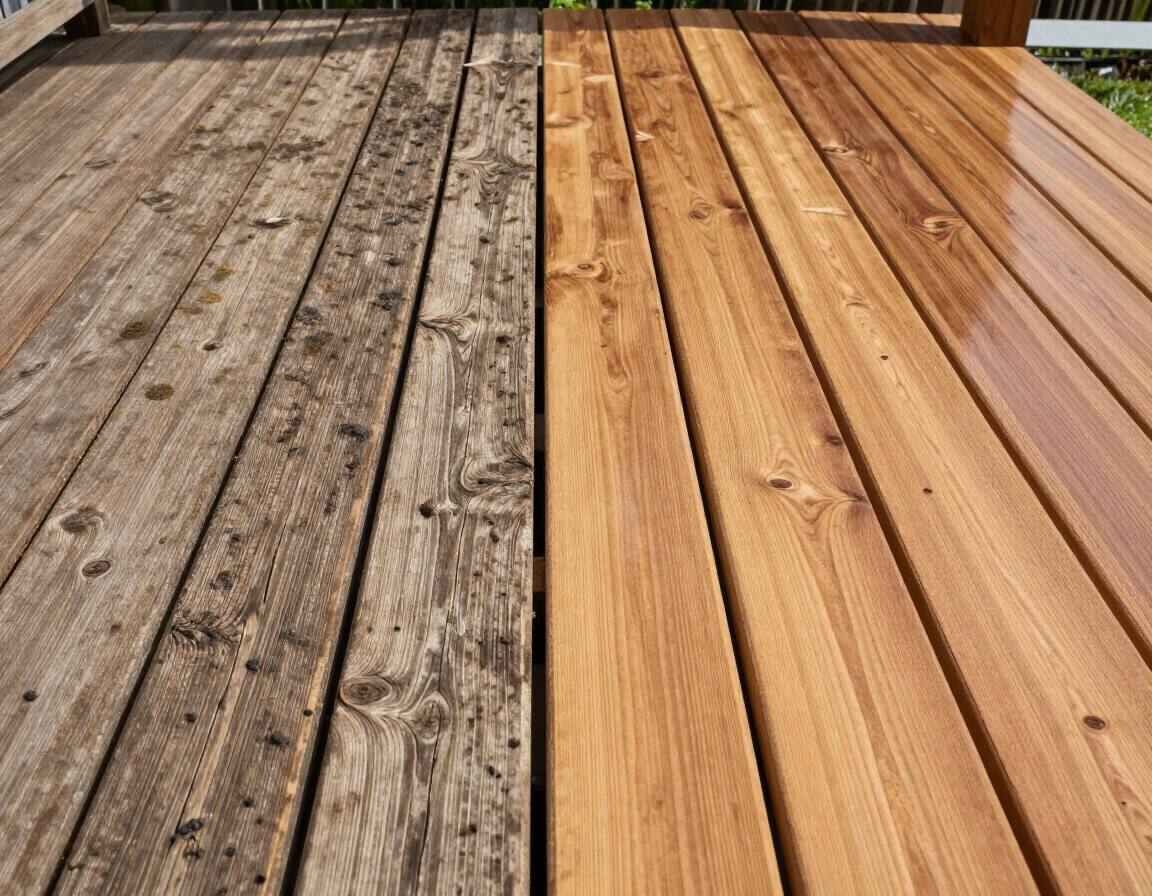
Dirty vs clean wood

Common mistakes to avoid when cleaning wood

Even with the best intentions, DIY deck cleaning can go sideways. One of the most common errors is using chlorine bleach in high concentrations. While bleach kills mildew, it also breaks down the lignin in the wood—the "glue" that holds wood fibers together. This results in a bleached-out, unnatural white look and a weakened deck surface.

Another mistake is working in the direct, midday sun. Cleaners can dry too quickly on the hot wood, leaving behind a film or staining the surface before you have a chance to rinse. It is much better to work on an overcast day or during the early morning hours when the wood is cool to the touch.

Finally, many people forget the "under-deck" area. If you have a raised deck, debris often collects on the joists underneath. Cleaning from the top down is great, but ensuring the structural components below are free of damp debris will extend the life of your deck by years. This is especially true for dock and marine cleaning where moisture is constant.

When is the best time to clean your deck in Belfast?

Timing is everything in Mid-coast Maine. The ideal window for cleaning your wood deck is usually late May or early June. By this time, the heavy pollen drop has usually subsided, and the "mud season" has dried out enough that you won't immediately track dirt back onto your fresh surface.

Cleaning before the heat of July and August ensures that you can apply a fresh coat of sealer or stain under optimal conditions. Most stains require the wood to be below a certain moisture content. If you clean in early June, the wood has plenty of time to dry out before the humid dog days of summer arrive. If you wait too long, you might find yourself rushing to stain in September when the morning dew makes it difficult for products to adhere properly.

If you are a seasonal resident coming to the area for the summer, scheduling your spring property opening services including pressure washing early is essential. This ensures your home is ready for guests the moment you arrive.

Essential steps for a safe summer deck

Safety isn't just about the wood; it's about the people using it. A dirty deck isn't just an eyesore—it's a slip hazard. Algae and moss become incredibly slick when wet, which can lead to nasty falls during a summer rain shower or after a splash from the pool.

  • Use the Right Tools: A long-handled deck brush with medium-soft bristles is your best friend. It allows you to scrub without breaking your back.
  • Work in Sections: Don't try to soap the whole deck at once. Work in 10x10 foot areas to ensure the cleaner stays wet and active.
  • Rinse with Care: Always rinse in the direction of the wood grain. This helps push the dirt out of the pores rather than deeper into them.
  • Evaluate the Finish: Once clean, water should bead on the surface. If it soaks in immediately, your wood is thirsty and needs a fresh coat of oil or sealer.

Summary of Safe Deck Cleaning Practices

Cleaning a wood deck safely requires a balance of the right cleaning agents, gentle mechanical scrubbing, and patience. By choosing a soft wash approach over high-pressure blasting, you protect the delicate fibers of your cedar or pine deck, ensuring it remains a safe and beautiful space for years to come. Remember that preparation—clearing the area and protecting your plants—is just as important as the cleaning itself.

Key Takeaways for Your Deck Project:

  • Prioritize Soft Washing: Use chemicals to do the work, not high-pressure water.
  • Inspect First: Identify rot or structural issues before you start the cleaning process.
  • Protect Your Landscape: Keep your Maine gardens safe by pre-wetting plants.
  • Dry Time Matters: Allow 48 hours of drying before applying any stains or sealers.
  • Professional Help: If the job feels too big or the wood is delicate, contact a local deck cleaning expert to handle the heavy lifting safely.

Ready to get your home summer-ready? Whether it's your siding, roof, or deck, we are here to help. Contact us today for a free estimate on your next exterior cleaning project in the Belfast and Rockland areas!

Recent Posts

Professional roof soft washing treatment on a Maine home.
June 30, 2026
Discover why roof soft washing is the safest way to remove moss from your Belfast, Maine home. Protect your roof and improve curb appeal today.
Clogged gutter overflowing with water and leaves on a Maine home.
June 30, 2026
Learn why clogged gutters lead to serious home water damage in Belfast, ME. Discover the risks of foundation rot, roof leaks, and siding damage in this expert guide.
A clean Maine home exterior in the spring sun.
June 30, 2026
Prepare your Belfast or Camden seasonal home with our comprehensive spring property opening checklist. Get your Maine property summer-ready today.
A clean wooden dock overlooking the Maine coastline.
June 30, 2026
Discover why regular dock cleaning is vital for Belfast and Camden waterfront homes. Learn how to prevent rot, algae, and salt damage with expert tips from Belfast Power Wash.
A clean driveway in Belfast, Maine
June 30, 2026
Discover how often you should pressure wash your driveway in Belfast, ME. Learn about seasonal maintenance, local weather impacts, and professional tips.
Professional exterior cleaning comparison for Belfast Maine homes.
June 1, 2026
Learn the difference between pressure washing vs soft washing for your Belfast, ME home. Discover which method safely cleans siding, roofs, and decks in Mid-coast Maine.